
You’ve been staring at that editorial calendar for twenty minutes now. Should you write about topic A because your competitor did? Topic B because it showed up in a keyword tool? Or topic C because your CEO’s nephew mentioned it at Thanksgiving?
Here’s a better idea: let predictive content planning do the heavy lifting. Instead of consulting your gut or throwing darts at a list of keywords, modern AI analytics can tell you exactly which topics will gain traction fastest based on competitor velocity, rising search intent, and your site’s existing authority. It’s like having a time machine, except it actually works and doesn’t violate any laws of physics.
Table of contents
- Why predictive SEO beats guessing
- How AI content gap analysis actually works
- Building your quarterly SEO roadmap
- SEO topic forecasting in practice
- Machine learning content strategy fundamentals
- Monitoring results with AI rank tracking
Key takeaways
| Point | Details |
| Predictive planning eliminates guesswork | AI analytics identify which topics will gain traction based on competitor data, search trends, and your site’s authority. |
| Gap analysis shows quick wins | AI content gap analysis reveals where competitors rank but you don’t, prioritizing opportunities by difficulty and traffic potential. |
| Quarterly roadmaps provide structure | A 90-day SEO roadmap balances quick wins with long-term authority building while adapting to algorithm changes. |
| Machine learning improves over time | Machine learning content strategy gets smarter with each content cycle, refining recommendations based on actual performance. |
| Real-time monitoring catches changes early | Automated rank alerts and real-time SEO monitoring let you adjust quickly when rankings shift or new opportunities emerge. |
Why predictive SEO beats guessing
Traditional content planning involves a lot of hopeful thinking. You research keywords, check search volumes, maybe peek at what’s ranking, and then cross your fingers that your article will somehow break through.
Predictive SEO flips that model. Instead of asking “what could we rank for?”, it asks “what will we rank for given our current authority, the competitive landscape, and emerging search patterns?” The difference matters more than you’d think.
Modern platforms analyze thousands of ranking factors simultaneously—competitor content velocity, topical authority signals, SERP feature changes, seasonal trends, and more. They compare your domain’s historical performance against similar sites and calculate probability scores for different content opportunities.
The result? You stop wasting time on articles that were never going to rank anyway. You also stop ignoring opportunities that seem difficult but are actually within reach given your site’s specific strengths.
According to Search Engine Journal, sites using predictive analytics for content planning see 40% faster ranking improvements compared to those relying solely on traditional keyword research. Apparently data beats intuition. Who knew?
How AI content gap analysis actually works
AI content gap analysis sounds impressive at conferences. In practice, it’s remarkably straightforward—and genuinely useful.
The system starts by identifying your closest competitors. Not the giant publications you’ll never outrank, but sites with similar domain authority, topical focus, and audience. Then it maps every keyword they rank for that you don’t.
So far, this resembles traditional gap analysis. The AI part comes next.
Scoring opportunities by likelihood
Rather than showing you a massive spreadsheet of missing keywords (helpful, but overwhelming), AI content gap analysis scores each opportunity based on:
- Your site’s topical authority in that subject cluster
- Current ranking difficulty versus your historical performance on similar queries
- Traffic potential weighted by conversion probability
- Content format requirements (listicle, guide, comparison, etc.)
- Estimated time to first page based on competitor content velocity
The algorithm essentially asks: “Given what this site has accomplished before, how likely is it to succeed with this topic, and how much would success matter?”
You end up with a prioritized list that focuses your energy where it’ll actually produce results. Revolutionary? No. Significantly better than guessing? Absolutely.
Identifying format gaps
Sometimes the gap isn’t the topic—it’s how you’re covering it. You might have an article about email marketing automation, but competitors are winning featured snippets with comparison tables, video tutorials, or interactive calculators.
Smart AI systems flag these format gaps separately. They’re often faster wins than creating entirely new content, which makes them perfect for quarterly planning when you need some early momentum.
Building your quarterly SEO roadmap
A quarterly SEO roadmap needs to balance three things: quick wins that build confidence, medium-difficulty topics that expand your authority, and ambitious pieces that position you for long-term growth.
Most teams get this balance wrong. They either chase only easy keywords (limited upside) or only ambitious topics (results take forever, morale suffers). A proper 90-day plan addresses all three.
Month one: quick wins and foundation
Start your quarter with content you’re highly likely to rank for within 30–45 days. These are usually:
- Long-tail variations of topics where you already rank on page two
- Format updates to existing content (adding comparison tables, FAQ sections, or videos)
- Gaps where competitors have weak, outdated content
- Topics directly adjacent to your strongest existing pages
The goal isn’t just traffic—it’s proving the system works. When stakeholders see results in week six rather than month six, they stop asking why you’re not writing about whatever trend piece they saw on LinkedIn.
Month two: authority expansion
Month two focuses on medium-difficulty topics that expand your topical authority. SEO topic forecasting helps identify emerging clusters where search intent is growing but competition hasn’t fully arrived yet.
Look for topics where Google Trends shows rising interest, existing content is thin, and the subject connects naturally to your quick wins from month one. These pieces take longer to gain traction but establish you as a comprehensive resource in your niche.
This is also where machine learning content strategy becomes particularly valuable—it can spot rising topics before they become obvious to everyone else. Getting quality content published three months before your competitors notice the opportunity gives you a meaningful head start.
Month three: ambitious plays
Now you can afford to take some swings at harder topics. These are competitive keywords with high search volume, comprehensive content requirements, and longer ranking timelines.
You won’t see results this quarter. That’s fine. By the time quarter two rolls around, these pieces will start gaining momentum—and because you’re continuously publishing quick wins alongside them, you’ll have the patience to let them mature.
Think of ambitious content as compound interest for SEO. It doesn’t pay off immediately, but skipping it entirely means you’ll never build the authority to compete on valuable terms.
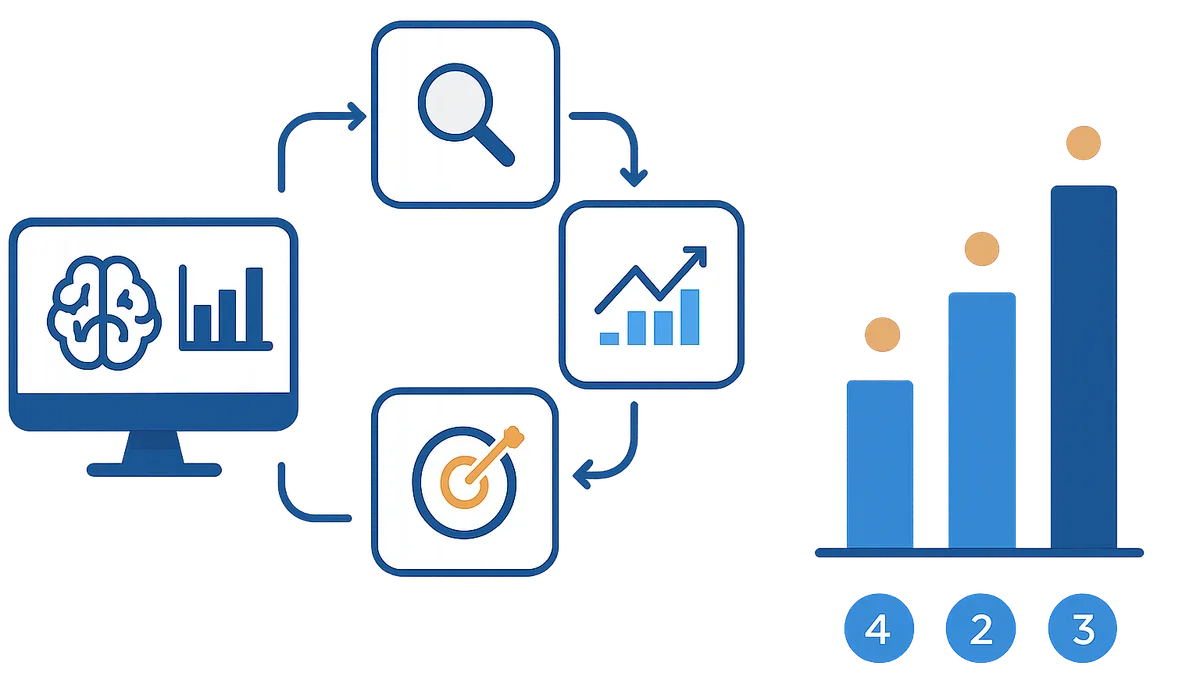
SEO topic forecasting in practice
SEO topic forecasting sounds like something that requires a PhD in data science. Actually implementing it requires surprisingly little technical knowledge—assuming you’re using a platform that’s done the difficult parts for you.
The key is understanding what inputs matter and which ones are just noise.
Signals that actually predict success
Effective forecasting models prioritize these signals:
- Competitor content velocity: How quickly are similar sites publishing on this topic? Rapid increase usually indicates rising opportunity or increased difficulty—context determines which.
- Search intent shifts: Are people asking different questions about this topic than they were six months ago? Intent changes often precede SERP reshuffles.
- SERP feature volatility: Topics where featured snippets, People Also Ask boxes, or video carousels keep changing hands signal that Google hasn’t settled on what format best serves users.
- Backlink velocity to ranking pages: When the current top 10 results are suddenly attracting more backlinks, it suggests the topic is gaining broader interest.
- Your historical performance on adjacent topics: If you’ve ranked well for related queries, you’ve demonstrated relevant topical authority.
Machine learning models weigh these signals against thousands of similar historical scenarios to generate probability scores. You don’t need to understand the math—you just need to trust that it’s better than your gut feeling. Which it almost certainly is.
Adjusting forecasts mid-quarter
The best quarterly SEO roadmap adapts when reality diverges from predictions. Google updates algorithms. Competitors launch unexpected content. Search trends shift faster than forecasted.
Build review checkpoints at weeks 4 and 8. Compare actual performance against predictions. If multiple quick-win topics underperformed, you may have overestimated your topical authority in that cluster—shift future efforts accordingly. If a medium-difficulty topic ranked faster than expected, double down on similar opportunities.
Predictive planning isn’t about creating a rigid plan and following it regardless of results. It’s about making better initial decisions and then adjusting intelligently as data arrives.
Machine learning content strategy fundamentals
Machine learning content strategy improves with every content cycle. The algorithms learn which of their predictions were accurate, where they overestimated difficulty, and which ranking factors mattered most for your specific site.
This means your second quarter of predictive planning will generate better recommendations than your first. Your fourth quarter will beat your second. You’re essentially training a model that understands your site’s unique strengths and weaknesses.
Feeding the algorithm useful data
Most machine learning systems improve fastest when you provide clear success metrics. Define what “success” means for each content type:
- Informational content: Ranking position and click-through rate
- Comparison content: Conversion rate and time on page
- Tutorial content: Engagement metrics and return visits
- Commercial content: Direct conversions or assisted conversions
When the algorithm knows what you’re optimizing for, it can refine its recommendations toward outcomes you actually care about. Otherwise you might rank beautifully for topics that generate zero business value. Technically impressive, practically useless.
Avoiding common mistakes
Two mistakes consistently undermine machine learning content strategy:
First, treating predictions as guarantees. A 75% probability of ranking in the top 10 within 90 days means you’ll succeed three times out of four—not every single time. When a predicted quick win underperforms, that’s data, not failure. Adjust and move forward.
Second, ignoring recommendations that seem counterintuitive. The algorithm might suggest a topic that doesn’t match your assumptions about your audience or your site’s strengths. Sometimes the algorithm is wrong. Often it’s spotted a pattern you missed. Test the recommendation before dismissing it.
Monitoring results with AI rank tracking
Publishing content based on AI predictions only makes sense if you’re actually monitoring whether those predictions came true. This is where AI rank tracking and real-time SEO monitoring earn their keep.
Traditional rank tracking checks your positions once daily, maybe once weekly. That’s fine for stable keywords you’ve ranked for forever. It’s inadequate for new content where positions can shift dramatically as Google evaluates quality signals, user engagement, and competitive response.
Why real-time matters for new content
During the first 30 days after publishing, Google runs what’s essentially a controlled experiment with your content. It shows your page to small segments of searchers, measures engagement, and adjusts your position based on performance.
Real-time SEO monitoring catches these fluctuations as they happen. When your new article suddenly jumps from position 47 to position 12, you know Google is testing it. If it drops back to 38 a few days later, user engagement probably didn’t meet expectations—time to improve the content, not wait three months hoping it recovers.
Automated rank alerts save you from obsessively checking dashboards every fourteen minutes. Unfortunately, they can’t make rankings improve faster. We’ve tested this extensively.
Connecting tracking to forecasting
The real power emerges when AI rank tracking feeds directly back into your forecasting model. Each ranking movement becomes a data point that refines future predictions.
Did your content rank faster than predicted? The algorithm learns your domain carries more authority in that topic cluster than it initially estimated. Did several pieces underperform? The model adjusts its understanding of your competitive position.
Over time, this feedback loop makes your quarterly planning increasingly accurate. Your sixth 90-day roadmap will waste far less effort than your first because the system has learned what actually works for your specific site.
This is also where the relationship between content strategy and techniques like upselling becomes relevant—understanding which content drives not just traffic but qualified leads helps refine which opportunities to prioritize.
Putting it all together
Predictive content planning transforms SEO from educated guessing into data-informed decision-making. You’ll still get some predictions wrong—algorithms analyze probability, not certainty—but you’ll waste dramatically less time on content that was never going to succeed.
Your quarterly SEO roadmap should exit the planning phase with three clear lists:
- 5–8 quick wins to publish in month one
- 4–6 authority expansion pieces for month two
- 2–4 ambitious long-term plays for month three
Track everything with real-time monitoring. Review performance at weeks four and eight. Adjust your month-three plan based on what months one and two taught you.
Then do it again next quarter, armed with better data and smarter algorithms. SEO remains difficult. But it no longer requires consulting a crystal ball or your CEO’s nephew. Progress, as they say.
Frequently asked questions
What makes predictive content planning more accurate than traditional keyword research?
Predictive content planning analyzes not just search volume and keyword difficulty, but also competitor velocity, your site’s specific topical authority, SERP volatility, and historical performance patterns. It generates probability-based recommendations rather than generic opportunity scores, which means it accounts for your site’s unique strengths and weaknesses instead of treating all domains equally.
How long does it take to see results from a quarterly SEO roadmap?
Quick-win content typically shows results within 30–45 days, authority expansion pieces within 60–90 days, and ambitious topics in 90–120 days. The roadmap is structured so you’re seeing continuous progress throughout the quarter rather than waiting three months for any results. Month one’s quick wins build confidence while longer-term content matures.
Can AI content gap analysis work for small sites with low domain authority?
Yes, often better than for established sites. AI gap analysis compares you against competitors with similar authority levels, not against industry giants you can’t realistically compete with yet. It identifies opportunities where weak competitor content or emerging search intent gives smaller sites a genuine chance to rank. The key is that it recommends realistic targets rather than aspirational keywords you’ll never capture.
What’s the difference between AI rank tracking and regular rank tracking?
Traditional rank tracking checks positions once daily at set times. AI rank tracking monitors fluctuations throughout the day, identifies patterns in ranking volatility, sends automated rank alerts when significant changes occur, and feeds performance data back into forecasting models to improve future predictions. For stable rankings, the difference is minimal. For new content or volatile SERPs, real-time monitoring catches opportunities and problems much faster.
How does machine learning improve content strategy over time?
Machine learning models analyze which predictions were accurate, where they overestimated or underestimated difficulty, and which ranking factors mattered most for your specific site and niche. With each content cycle, the algorithm refines its understanding of your domain’s strengths, competitive position, and which opportunities match your capabilities. Your fourth quarter of predictive planning generates significantly better recommendations than your first because the model has learned from actual performance data.
 English
 Swedish
 German
 French