
Your inbox has 47 new rank notifications. Keyword #283 dropped from position 12 to 13. Your brand term moved from position 1 to position 1. A keyword nobody remembers adding climbed three spots on page seven. Congratulations, you now hate every notification ever invented.
This is alert fatigue, and it’s killing productivity faster than a surprise Monday morning client call. Most SEO tools treat every ranking fluctuation like breaking news, which means actual business-critical changes get buried under an avalanche of digital noise. In this comparison, we’ll look at how Seoella and Babylovegrowth handle smart rank alerts, notification threshold tuning, and whether either one can save you from email bankruptcy.
Innehållsförteckning
- The alert fatigue problem nobody talks about
- How Seoella approaches intelligent alerts
- Babylovegrowth feature overview
- Notification threshold tuning compared
- Priority-based monitoring and keyword value tracking
- Which tool actually reduces alert fatigue SEO
- Pricing and value consideration
- The verdict: Seoella or Babylovegrowth?
Viktigaste slutsatser
| Punkt | Detaljer |
| Alert fatigue costs time | Most teams waste hours sorting through irrelevant rank notifications instead of focusing on real opportunities. |
| Smart thresholds matter | Intelligent alerts calibrated by keyword value and search volume surface only business-critical changes. |
| Seoella emphasizes context | Alerts factor in historical volatility and commercial intent, not just raw position changes. |
| Babylovegrowth offers simplicity | Straightforward tracking with less customization may suit smaller projects but can overwhelm larger sites. |
| Configuration prevents noise | Properly tuned notification thresholds turn rank tracking from a distraction into a strategic asset. |
The alert fatigue problem nobody talks about
Every SEO professional has been there. You set up rank tracking with the best intentions, excited to monitor progress and catch problems early. Within a week, your inbox looks like a particularly aggressive email marketing campaign had a baby with a spreadsheet.
The core issue isn’t that tools track rankings badly. It’s that they notify you about everything equally. A five-position jump for a keyword with 20 monthly searches gets the same urgent email as your money-term dropping out of the top three. Your brain starts ignoring all alerts, which means you miss the ones that actually matter.
This phenomenon—alert fatigue SEO—costs teams genuine opportunities. When everything’s urgent, nothing is. You need AI-baserad rankingövervakning that understands the difference between noise and signal, between a normal SERP shuffle and something worth your immediate attention.
Why standard alerts fail
Traditional rank trackers notify based on position change alone. Dropped three spots? Email. Climbed two positions? Email. Moved from 47 to 46? Believe it or not, also email.
They ignore:
- Search volume and traffic potential
- Keyword value and conversion likelihood
- Historical volatility patterns
- Whether anyone on your team actually cares about that keyword
The result is notification noise that trains you to ignore your monitoring tools entirely. Fairly counterproductive for something meant to keep you informed.
How Seoella approaches intelligent alerts
Seoella built its notification system around a radical concept: not every ranking change deserves your attention. Shocking, we know.
The platform uses what it calls priority-based monitoring, which weighs several factors before deciding whether to bother you:
Keyword value tracking: High-value keywords with strong commercial intent get tighter thresholds. A two-position drop for your main product term triggers an alert. That obscure informational keyword moving around on page three? Seoella assumes you’re busy.
Search volume consideration: Keywords with 50,000 monthly searches matter more than ones with 50. The notification threshold adjusts automatically based on traffic potential.
Historical volatility analysis: If a keyword bounces between positions 8 and 12 every week, Seoella learns that pattern. It won’t alert you to normal fluctuation—only to genuine trend changes that break the historical pattern.
Customizable thresholds: You can set different alert rules for different keyword groups. Brand terms, money keywords, and informational content can each have appropriate sensitivity levels.
The system essentially functions as a smart filter between raw ranking data and your inbox. It handles SEO-övervakning i realtid without assuming you want real-time notifications about everything it monitors.
Example configuration
Let’s say you’re tracking 500 keywords. In Seoella, you might configure:
- Top 50 money keywords: Alert on any drop of 2+ positions or exit from top 10
- Brand terms: Alert only on drops below position 3
- Informational content: Alert only on drops of 10+ positions or exit from page 1
- Low-volume keywords: Weekly summary only, no individual alerts
Suddenly those 500 keywords generate maybe three alerts per week instead of 47 per day. Your blood pressure thanks you.
Babylovegrowth feature overview
Babylovegrowth takes a different approach to rank tracking. The platform emphasizes simplicity and clean data presentation, which appeals to teams who want straightforward monitoring without extensive configuration.
The tool provides daily rank checks across major search engines, historical tracking graphs, and competitor comparison features. The interface is genuinely pleasant—no small achievement in the often cluttered world of SEO dashboards.
However, Babylovegrowth’s notification system is notably less sophisticated. Alerts are primarily threshold-based: you set a position change number (say, three positions), and the tool emails you whenever any keyword crosses that threshold.
What Babylovegrowth does well
Credit where it’s due: Babylovegrowth excels at clean reporting and ease of setup. You can get rank tracking running in minutes, and the visual presentation of data is genuinely helpful for client reports.
The platform also handles mobile vs desktop tracking cleanly, and the competitor comparison feature makes it easy to see where you’re winning and losing against specific rivals.
For smaller sites tracking 50-100 keywords, the simpler alert system may be perfectly adequate. The problems emerge at scale.
Where it falls short
Babylovegrowth treats all keywords essentially equally. There’s no built-in concept of keyword value tracking or priority-based monitoring. A high-value commercial keyword and a barely-searched blog topic get the same alert logic.
You can’t easily set different thresholds for different keyword groups. It’s one global setting for everything, which means you’re choosing between too many alerts (set sensitive thresholds) or missing important changes (set conservative thresholds).
The tool also doesn’t learn from historical volatility. If your rankings naturally fluctuate in a particular SERP, Babylovegrowth will keep alerting you to that same pattern week after week. Technically accurate, practically exhausting.
Notification threshold tuning compared
Let’s get specific about notification threshold tuning, because this is where the tools diverge most dramatically.
In Seoella, threshold tuning is both automatic and customizable. The platform starts with intelligent defaults based on keyword data, then lets you override those defaults for specific keyword groups or individual terms.
You can configure thresholds based on:
- Absolute position (alert if drops below position X)
- Relative change (alert on Y position drop)
- Page boundaries (alert on exit from page 1, top 3, etc.)
- Traffic estimates (alert when estimated traffic loss exceeds Z%)
- Trend duration (alert only if change persists for N days)
That last one is particularly clever. Many SERP fluctuations are temporary—Google testing variations, seasonal shifts, or just the normal chaos of search results. An alert that waits to see if a change sticks for 3-5 days before notifying you eliminates a huge volume of meaningless notifications.
Babylovegrowth’s threshold options
Babylovegrowth offers basic threshold configuration: set a number of positions, apply it globally, receive alerts when keywords move that amount.
You can choose daily or weekly notification frequency, which helps somewhat with volume. But you’re still getting alerts about every keyword that crosses your threshold, regardless of whether that movement matters to your business.
There’s no automatic adjustment based on keyword characteristics, no learning from historical patterns, no differentiation between a volatile SERP and a stable one.
For what it’s worth, this simplicity makes Babylovegrowth easier to set up initially. You’re not spending an hour configuring notification rules. You’re also spending considerably more time later sorting through notifications to find the ones that matter.
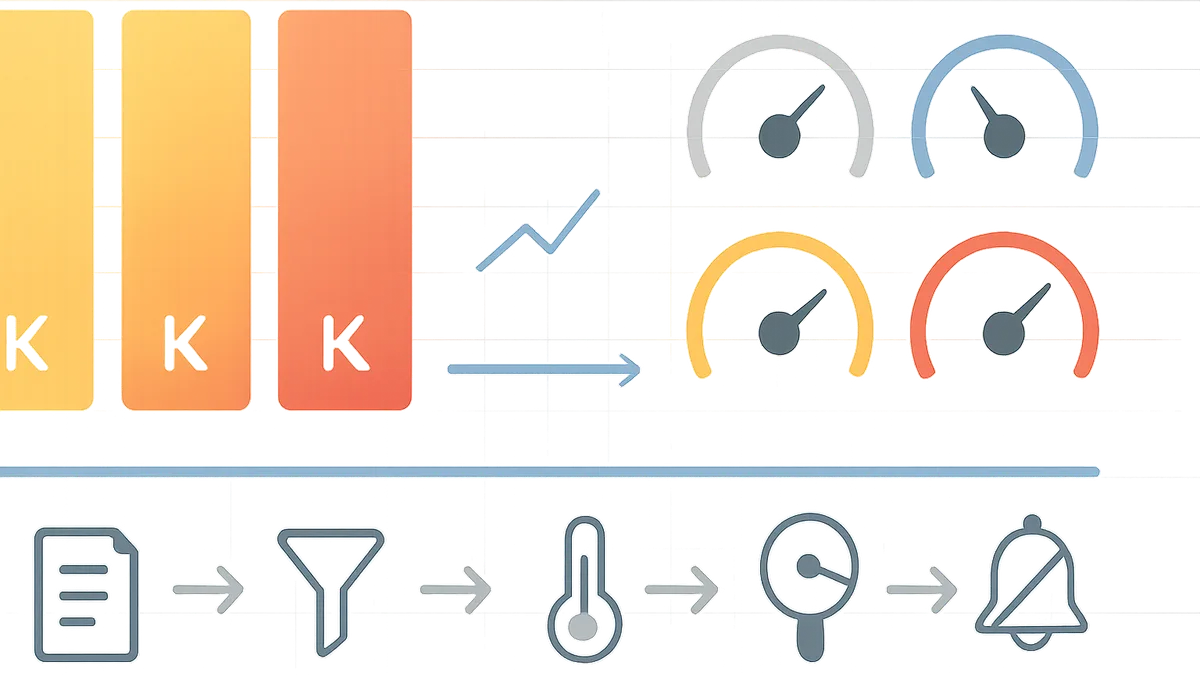
Priority-based monitoring and keyword value tracking
Here’s where Seoella’s architecture really shines. The platform was built from the ground up around the idea that not all keywords deserve equal attention.
Priority-based monitoring means you can tag keywords with business value: high, medium, low, or custom priority levels. Seoella then adjusts everything—alert sensitivity, dashboard prominence, reporting frequency—based on those priorities.
Your highest-priority keywords get automatiska rankningsvarningar for minor movements. Medium-priority terms need more significant changes to trigger notifications. Low-priority keywords might only appear in weekly summaries unless something genuinely dramatic happens.
How keyword value tracking works
Keyword value tracking goes beyond simple search volume. Seoella considers:
- Estimated traffic based on position and search volume
- Commercial intent signals in the keyword itself
- Your historical conversion data if you connect analytics
- Custom value assignments you set manually
This matters enormously for ecommerce sites, where a keyword like “buy industrial widgets wholesale” might have 1/10th the search volume of “what are widgets” but represent 100x the revenue potential.
Incidentally, understanding keyword value connects to broader business strategy—similar to how professionals weigh different opportunities, as discussed in this ecommerce trend analysis.
Babylovegrowth’s approach to keyword value
Babylovegrowth doesn’t really have one. You can manually organize keywords into groups or tags, but those groupings don’t affect alert logic or notification priority.
Every keyword in every group gets the same treatment. It’s democratic, certainly. Also inefficient.
You could theoretically work around this by maintaining separate Babylovegrowth projects for high-priority vs low-priority keywords, but now you’re managing multiple dashboards and paying for multiple tracking quotas. Solving a problem the tool should solve automatically.
Which tool actually reduces alert fatigue SEO
Let’s address the core question: which platform actually solves alert fatigue rather than just offering the ability to turn notifications off entirely?
Seoella reduces alert fatigue through intelligence. The system actively filters what reaches you, learning what matters to your specific site and keyword portfolio. After initial configuration, most users report checking their rank alerts becomes useful again instead of a chore to avoid.
The weekly summary emails are particularly well-designed—they surface the top changes that didn’t quite meet alert thresholds but might be worth knowing about, grouped in a scannable format. You get context without drowning in it.
Babylovegrowth reduces alert fatigue through volume control. You can set very conservative thresholds (alert only on 10+ position drops) or reduce notification frequency to weekly summaries. You’ll get fewer emails, certainly.
You’ll also miss important changes that happen to your most valuable keywords, because the tool can’t distinguish between them and your throwaway content.
Real-world scenario
Imagine you manage an ecommerce site tracking 800 keywords. You have:
- 20 high-value product keywords that drive 60% of revenue
- 100 category and related product terms that drive another 30%
- 680 informational, long-tail, and experimental keywords making up the remaining 10%
With Seoella, you configure tight alerts on those 20 mission-critical terms, moderate alerts on the 100 supporting keywords, and summary-only reporting on the long tail. You receive 3-5 actionable alerts per week and a scannable weekly summary.
With Babylovegrowth, you face an unpleasant choice. Set sensitive thresholds and receive 30+ alerts per week, most about keywords that barely matter. Set conservative thresholds and risk missing when a top-revenue keyword starts sliding.
Most people end up setting conservative thresholds and then checking the dashboard manually anyway, which rather defeats the purpose of automated alerts.
Pricing and value consideration
Neither tool will bankrupt you, but the value proposition differs significantly.
Babylovegrowth positions itself as an affordable rank tracker, with pricing that scales based on keyword count and check frequency. For basic tracking needs, it’s genuinely economical.
Seoella is priced slightly higher but includes the intelligent alerting infrastructure, priority management, and advanced threshold tuning as standard features. You’re paying for the tool to do thinking you’d otherwise do manually.
The value calculation depends on how you value your time. If you spend even 30 minutes per week sorting through irrelevant notifications or manually checking rankings because you’ve stopped trusting your alerts, Seoella’s efficiency gain likely justifies the cost difference within the first month.
If you’re tracking 50 keywords for a single small project and don’t mind simple alerts, Babylovegrowth’s lower entry price makes sense.
The verdict: Seoella or Babylovegrowth?
Babylovegrowth is a perfectly functional rank tracker that will reliably tell you where your keywords are positioned. If that’s all you need—straightforward monitoring without alert sophistication—it’s a reasonable choice.
Seoella is a rank intelligence platform that understands the difference between data and insight. It’s built for people who’ve experienced alert fatigue and want their monitoring tools to work for them rather than create more work.
For agencies managing multiple clients, in-house teams overseeing large sites, or anyone tracking more than 100 keywords, Seoella’s smart rank alerts system isn’t just better—it’s the difference between alerts you trust and alerts you’ve learned to ignore.
The notification threshold tuning alone saves most users hours per month. The priority-based monitoring ensures you actually notice when something important happens. The historical volatility learning means you stop getting alerts about normal SERP behavior.
Could you achieve something similar by meticulously configuring multiple Babylovegrowth projects and checking dashboards manually? Technically yes. You could also commute to work by pogo stick. We don’t recommend either approach.
When to choose Babylovegrowth
Choose Babylovegrowth if you:
- Track fewer than 100 keywords
- Don’t need sophisticated alert filtering
- Prefer manually checking a clean dashboard over receiving automated alerts
- Want the absolute lowest price point
When to choose Seoella
Choose Seoella if you:
- Track hundreds or thousands of keywords
- Need alerts you can actually trust and act on
- Want different monitoring approaches for different keyword priorities
- Value time saved over minor cost differences
- Have experienced alert fatigue and would like to stop experiencing it
Ultimately, both tools track rankings accurately. The question is whether you want a tool that simply reports data or one that helps you understand which data actually matters. For most SEO professionals, that distinction is worth considerably more than the price difference.
Vanliga frågor och svar
What makes smart rank alerts different from standard rank tracking notifications?
Smart rank alerts use keyword value, search volume, and historical volatility to determine which ranking changes deserve your attention, filtering out normal SERP fluctuations and low-impact movements. Standard alerts notify you about every position change equally, regardless of business impact or keyword importance.
How do you prevent alert fatigue when tracking hundreds of keywords?
Set different notification thresholds based on keyword priority—tight alerts for high-value terms, relaxed thresholds for informational content, and summary-only reporting for experimental keywords. Tools with priority-based monitoring automate this filtering so you receive only business-critical alerts.
Can Babylovegrowth handle large-scale rank tracking?
Babylovegrowth can track large keyword sets but lacks the sophisticated alert filtering needed to manage notifications at scale. Without priority-based monitoring or value-aware thresholds, you’ll likely face significant alert fatigue or need to disable most notifications entirely.
What is notification threshold tuning in SEO monitoring?
Notification threshold tuning is the process of setting rules that determine which ranking changes trigger alerts. Advanced tuning considers factors like position change magnitude, keyword value, traffic potential, and historical volatility patterns—not just raw position movement.
Does Seoella work better for agencies or in-house teams?
Seoella’s intelligent alerting and priority management benefit both agencies managing multiple client sites and in-house teams overseeing large keyword portfolios. Any situation where alert fatigue is a problem—which is most rank tracking scenarios above 100 keywords—gains significant efficiency from smart filtering.
 Swedish
 English
 German
 French